






Best Astrologer and Numerologist in Nagpur

Our Gallery

Our Contacts

1 Floor, Honey Indra Tower, Shastri Nagar, Nagpur, Maharashtra 440008.

Read More

Chhath Puja 2026: Why the Sun Is Worshipped & Its Astro-Numerological Significance
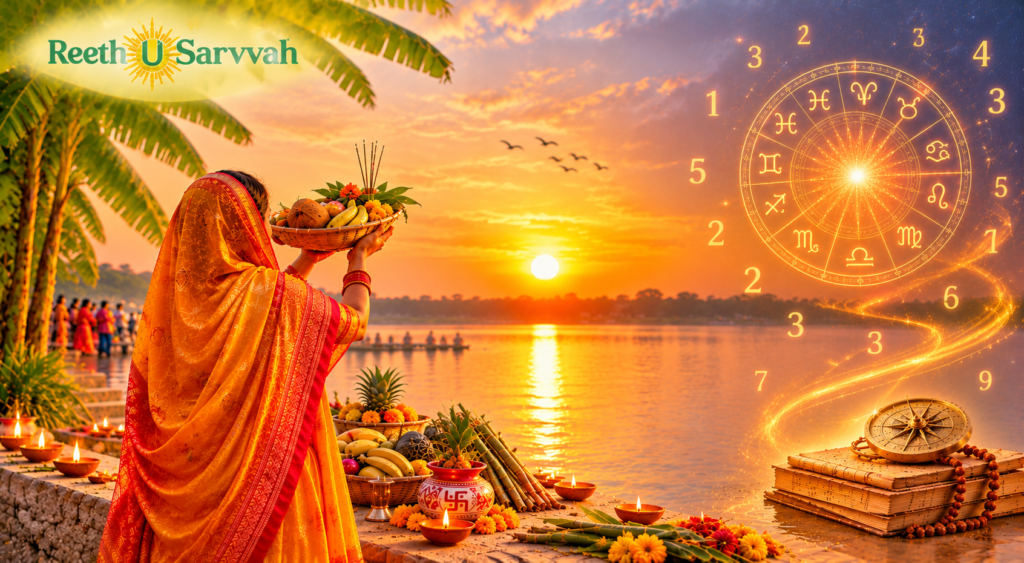
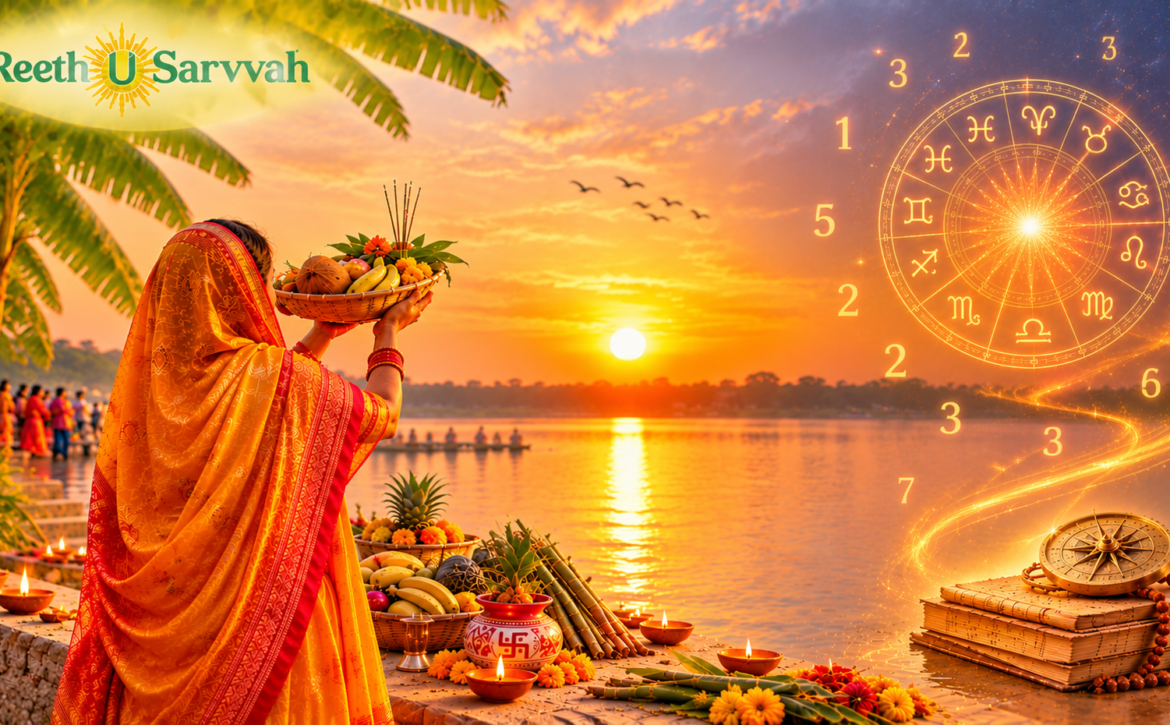
Chhath Puja 2026 with Sun worship, zodiac signs and astro-numerology symbolism.

Chhath Puja 2026 is a four-day festival in which devotees thank the Sun (Surya Dev) and Chhathi Maiya for life, health and family wellbeing. This guide has two parts. This explains the festival itself: its dates, rituals and meaning. Also explains how the Kundali connects with Chhath Puja, and what your birth chart and mulank says about the Sun this year.


Understanding Chhath Puja 2026

Why the Sun Is Worshipped on Chhath

The Sun is worshipped on Chhath because all life depends on it. Its light and warmth ripen crops, set the seasons and keep our bodies energetic, which is why Vedic tradition honours Surya as the giver of life. Three ideas sit behind the worship:

  • Gratitude: Surya is called the pratyaksh dev, the one deity we can see every single day, so Chhath is a direct way of saying thank you.
  • Health and wellbeing: the Sun is traditionally linked with vitality and healing, so devotees pray for their family’s good health and prosperity.
  • Setting and rising Sun: the setting Sun is honoured first to give thanks for the day that has passed, and the rising Sun is honoured next as a symbol of hope and a fresh start. Together they say that every ending and every beginning is sacred.

Who Are Surya Dev and Chhathi Maiya?

Surya Dev is the Sun God of the Vedas, pictured in tradition on a chariot drawn by seven horses. He is worshipped as the source of light, and in Vedic astrology his planet, the Sun, rules confidence and authority.

Chhathi Maiya is Goddess Shashthi, worshipped as the protector of children and families. The Puranas describe her as the guardian of newborns, and folk tradition in Bihar and eastern Uttar Pradesh regards her as Surya’s sister. Many families also worship her on the sixth day after a child’s birth.

The festival takes its name from her. Chhath comes from Shashthi, the sixth day of the bright half of the month of Kartik, which is the day of the main evening offering.
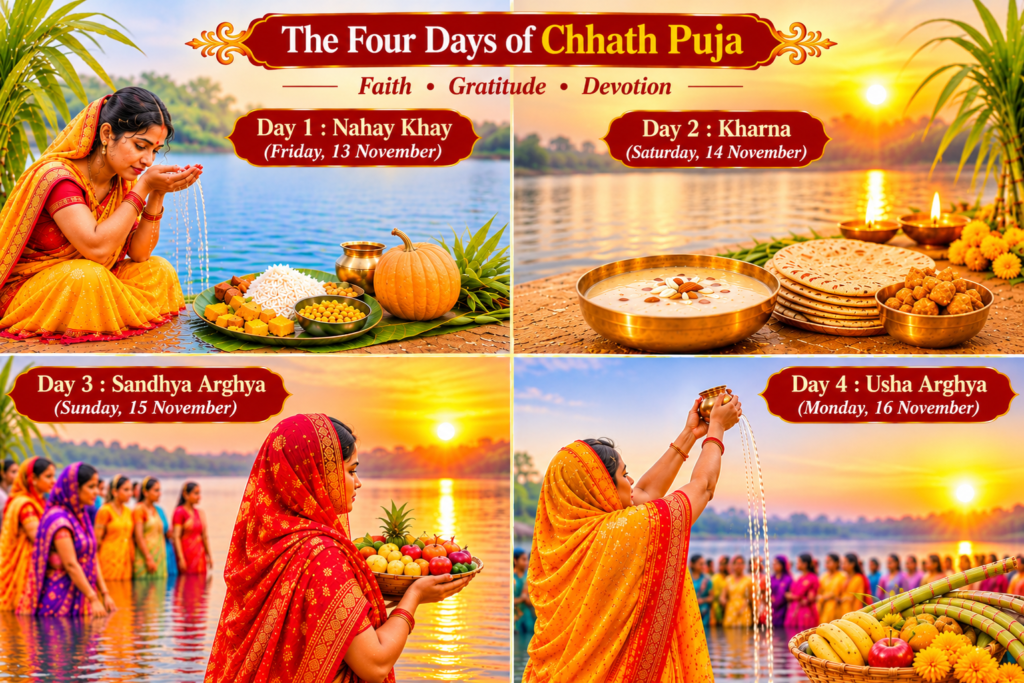

Four days of Chhath Puja 2026 featuring Nahay Khay, Kharna, Sandhya Arghya and Usha Arghya rituals with traditional offerings and Sun worship.

How the Four Days Unfold

Day 1 : Nahay Khay, a Cleansing Start (Friday, 13 November)

Devotees bathe in a river or other clean water and clean their homes. They eat one simple, pure (sattvic) meal, usually pumpkin curry, chana dal and rice.

Day 2 : Kharna, the Evening Meal and a Long Fast (Saturday, 14 November)

Devotees fast through the day. In the evening they eat sweet jaggery kheer and roti, then begin a fast without food or water that lasts about 36 hours.

Day 3 : Sandhya Arghya, Offerings at Sunset (Sunday, 15 November)

Families gather at a river, lake or pond. Standing in the water, devotees hold bamboo baskets filled with fruits, sugarcane and thekua, and offer arghya to the setting Sun.

Day 4 : Usha Arghya, Sunrise and the End of the Fast (Monday, 16 November)

Before dawn, devotees return to the water, offer arghya to the rising Sun, and then break the fast. The prasad is shared with family and neighbours.

Arghya is offered at your city’s own sunset and sunrise, so please check a local panchang for exact timings in Nagpur.

Stories Behind the Festival

  • King Priyavrata and Shashthi Devi: a grieving royal couple was blessed by the goddess, which is why she is worshipped for children’s wellbeing.
  • Draupadi and Karna: Draupadi is believed to have kept the fast for her family, and Karna, son of Surya, is said to have offered water to the Sun while standing in a river.
  • Sita and Sri Ram: local tradition in Bihar and eastern Uttar Pradesh says Sita offered arghya to Surya after returning from exile.

Symbols, Prasad and Colours

Jaggery in the kheer and thekua is linked with the Sun’s warmth, while sugarcane, fruits and coconut in the bamboo basket stand for abundance and thanks. Yellow, orange and saffron are the colours traditionally linked with the Sun, and black is usually avoided during Chhath.

Chhath in Nagpur and Away from Home

Chhath began in Bihar, Jharkhand and eastern Uttar Pradesh, but families now celebrate it in cities across India, including Nagpur, at lakes and riverbanks. If you cannot reach a ghat, a prayer at sunset and sunrise from your balcony or terrace carries the same spirit.


Kundali and Chhath Puja, the Astrological Significance

How the Kundali Connects with Chhath Puja

Chhath is devoted entirely to one planet, the Sun, and Surya Dev astrology is where the festival and your Kundali meet. In Vedic astrology the Sun (Surya) is the king of the planets, traditionally linked with confidence, willpower, vitality, career, authority and the father. Your Kundali shows where your Sun stands and how it behaves, which is why Chhath feels personal to many people astrologically.

Chhath also comes while the Sun moves through Libra, the sign where it is considered debilitated (neech) and traditionally weakest. Many astrologers read this as a quiet lesson: we honour the Sun with discipline and gratitude at the very time it needs support. 


What Your Birth Chart Reveals About Your Natal Sun: 

Everyone has a Sun in their Kundali, but the Sun in Kundali behaves differently for each person. Astrologers look at four things:

  1. Sign: the Sun is traditionally strong in Aries (exalted) and Leo (own sign), and weaker in Libra (debilitated).
  2. House: the area of life where the Sun sits and shows its effect.
  3. Company: conjunctions or aspects from Saturn, Rahu or Ketu are often read as strain on the Sun’s themes, such as confidence, recognition or the relationship with the father.
  4. Dasha: the planetary period in which the Sun’s results become most active.
Sun in houseLife area it traditionally colours
1stPersonality, self-image, vitality
5thChildren, creativity, education
7thPartnerships, balance of ego in relationships
9thFather, guidance, fortune, higher learning
10thCareer, status, public recognition (a traditionally strong placement)
12thExpenses, foreign connections, withdrawal from the spotlight

Traditionally, people whose Sun is under strain describe low confidence, delayed recognition, friction with authority, or a difficult bond with a father figure. A chart is read as a whole, so none of these points means something fixed about you.


What Your Kundali Says This Chhath Puja, by Ascendant

Throughout Chhath Puja 2026 the Sun is transiting Libra, and it moves into Scorpio around 16 to 17 November (panchangs differ on the exact hour, so check your local one). Where this transit lands in your Kundali depends on your Ascendant (Lagna): count the houses from your Lagna to Libra, and that is the area of life the Sun is lighting up during Chhath. Many astrologers also read the transit from the Moon sign, so both views are worth checking.

Because Libra is the Sun’s debilitated sign, the traditional reading is not one of fear. It suggests that this area of life benefits from patience, humility and steady effort rather than ego or hurry.

Your AscendantSun in Libra falls in yourArea to reflect on this Chhath
Aries7th houseMarriage, partnerships, business associates
Taurus6th houseDaily work, health habits, service, competition
Gemini5th houseChildren, creativity, education, romance
Cancer4th houseHome, mother, peace of mind, property
Leo3rd houseCourage, personal effort, siblings, communication
Virgo2nd houseFamily, savings, speech, self-worth
Libra1st houseSelf-image, confidence, vitality
Scorpio12th houseExpenses, rest, foreign ties, inner life
Sagittarius11th houseGains, networks, friends, long-term goals
Capricorn10th houseCareer, status, responsibilities
Aquarius9th houseFather, guidance, fortune, higher learning
Pisces8th houseSudden change, shared finances, deep research

How to use this: find your Ascendant on your Kundali, read your row, and spend a few quiet minutes at sunrise or sunset asking where you need more patience in that area.

A note on accuracy: this is a general reading by Ascendant. The Sun’s real effect on you also depends on your natal planets, aspects and current dasha. If you do not know your Ascendant, a personal Kundali reading in Nagpur (or online) will give it to you along with a view of this transit.


The Numerology Link: Mulank 1 and the Sun

In Mulank 1 numerology, the Sun rules Mulank 1. If your birth date is the 1st, 10th, 19th or 28th of any month, your Mulank is 1.

Mulank 1 people are often described as independent, determined and natural leaders. They may also be prone to pride or stubbornness. Chhath is a good time for them to reflect on balancing leadership with humility. This blend of planets and numbers is what we call astro-numerology, and it is the approach I use in every consultation.


Simple Ways to Honour Surya Energy

You do not need to observe the fast to feel the spirit of Chhath:

  • Spend a few quiet minutes in the morning sunlight and offer water to the rising Sun.
  • Chant “Om Suryaya Namah” or the Gayatri Mantra, or simply listen to it. Sound is a core part of my own practice.
  • Note three things you are grateful for each evening, in the spirit of the sunset offering.
  • Keep a steady daily routine, because discipline is the heart of Chhath.

FAQ:

Q1:  What are the four days of Chhath Puja?

The four days are Nahay Khay (ritual bath and a simple pure meal), Kharna (day-long fast and evening kheer), Sandhya Arghya (offering to the setting Sun) and Usha Arghya (offering to the rising Sun, then the fast is broken). The main fast runs about 36 hours without food or water.

Q2: What is the astrological significance of Chhath Puja?

Chhath is devoted entirely to the Sun, which in Vedic astrology governs confidence, vitality, authority, career and the father. Astrologers see it as a time to reflect on the Sun’s placement in your Kundali and to strengthen those areas through gratitude and discipline.

Q3: Which gemstone is linked with the Sun?

The Ruby, often called the Ruby gemstone for Sun. It should be worn only after your birth chart is reviewed, never chosen casually.

Q4: Can I celebrate Chhath in Nagpur or without going to a ghat?

Yes. Families celebrate Chhath in Nagpur at lakes and riverbanks, and if you cannot reach a ghat, a prayer at sunset and sunrise from your balcony or terrace carries the same spirit. For a personal Kundali reading in Nagpur or online, Reeth U Sarvvah offers a free first session.

Q5: Is Chhath celebrated twice a year?

Yes. Chhath is observed in Chaitra (March to April) and in Kartik (October to November). The Kartik Chhath, which falls shortly after Diwali, is the larger and more widely celebrated one.

Q6: What happens when the Sun is weak in your Kundali?

In Vedic astrology, a weak or afflicted Sun is traditionally associated with challenges relating to confidence, leadership, authority and recognition. Astrologers examine the Sun’s sign, house, planetary associations and current Dasha before interpreting its influence. However, a single planetary placement does not determine a person’s entire destiny.

Q7: What is the connection between Chhath Puja and Mulank ?

Chhath Puja is dedicated to Surya Dev, while numerology associates Mulank 1 with the Sun. Therefore, people with Mulank 1 may find the festival particularly meaningful as an opportunity to reflect on leadership, confidence, discipline and humility.


Want to Know What the Sun Says About You?

If you would like to understand your Sun placement, your Mulank, or how these energies shape your career, relationships and life direction, I would be happy to guide you. As an astrologer in Nagpur and a numerologist in Nagpur, I offer guidance both in person and online.

Book your first session. You can also book astrology consultation online.

Wishing you and your family a joyful and blessed Chhath Puja.

Reeth U Sarvvah Vedic Astrologer & Numerologist, Shastri Nagar, Nagpur

Related reading: to understand birth numbers meaning in more detail, read our guide on birth numbers and their hidden meanings.

Astrology and numerology are offered for guidance and self-reflection and are not a substitute for medical, legal or financial advice.

May this Chhat Puja bring light, wisdom, happiness and new beginnings into your life!

For personalised astrology and numerology guidance in Nagpur or online across India, you can book a consultation with Reeth U Sarvvah.


📍 1st floor, Honey Indra Tower, Inox Rd, beside Mahindra Unnati Motors, near Garoba Maidan, Phase 2, Shastri Nagar, Nagpur, Maharashtra 440008
📞 +91 8087669357
📧 reetrupani1@gmail.com
🌐 reethusarvvah.in
Read More

Navratri Colors 2026: 9 Days, Traditional Meanings & What Numerology Says About Your Birth Number

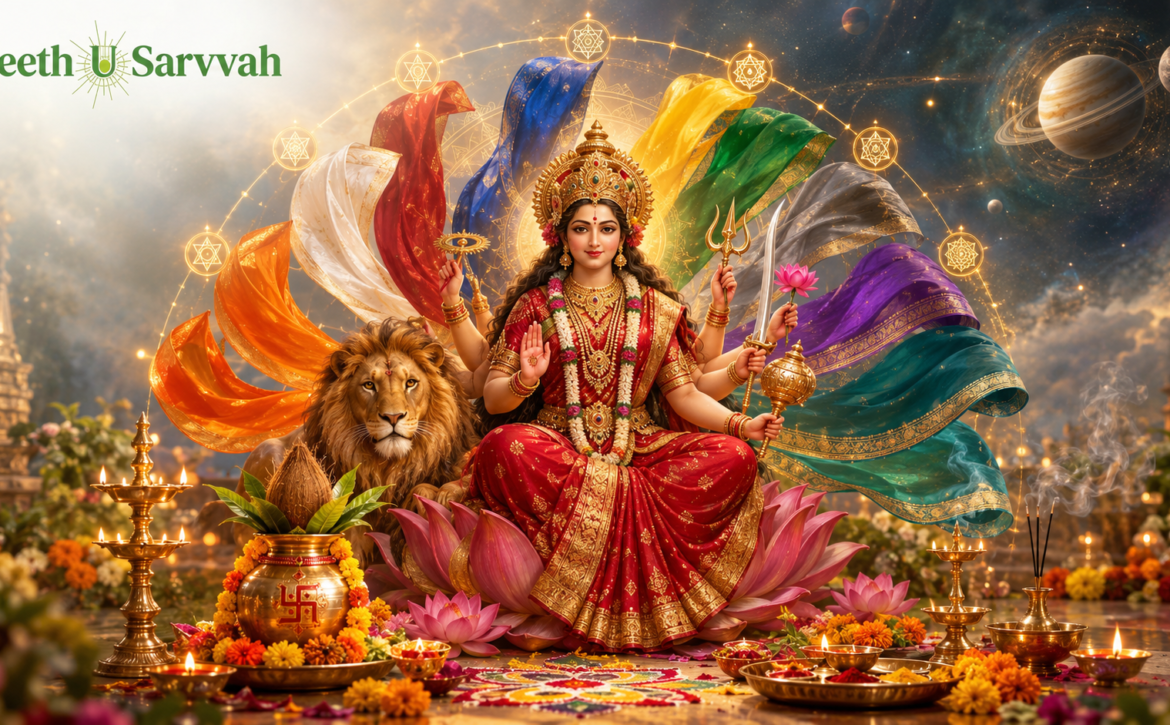
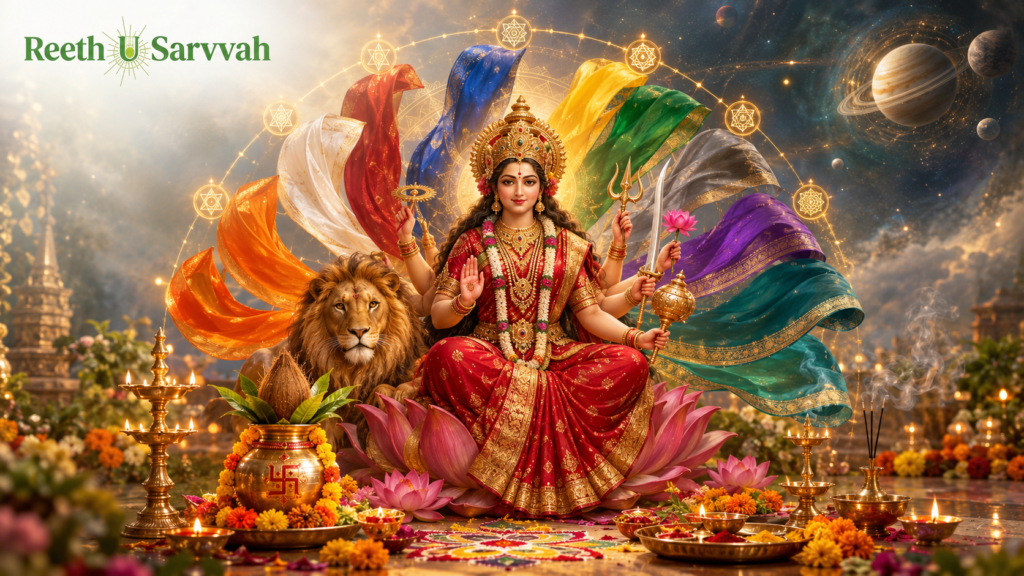
Nine traditional Navratri colours—orange, white, red, royal blue, yellow, green, grey, purple and peacock green—represented through decorative silk ribbons and festive puja elements.

Navratri Colors 2026: 9 Days, Traditional Meanings & What Numerology Says About Your Birth Number

  • Which colour should I wear on Navratri Day 1?
  • What are the nine Navratri colours in 2026?
  • Does my birth date have a connection with my Navratri colour?
  • Can numerology tell me which colour suits me?
  • Should I follow the daily Navratri colour or my personal lucky colour?

These are popular questions every year as Navratri approaches.

Sharad Navratri 2026 begins on Sunday, 11 October, and the nine-day celebration continues through 19 October, followed by Vijayadashami on 20 October. In the traditional 2026 colour sequence, Day 1 begins with orange and the colours change each day according to the weekday-based sequence.

For devotees in Maharashtra, including Nagpur, these colours are especially visible during festive gatherings, traditional dressing, Garba and Dandiya celebrations.

But there is another interesting question:

Can your own birth number add a more personalised numerology perspective to Navratri?

That is where traditional festival customs and numerology can be explored together.


What Are the Navratri Colors for 2026?

For Sharad Navratri 2026, the traditional nine-colour sequence is:

DateNavratri DayColour
October 11Day 1Orange
October 12Day 2White
October 13Day 3Red
October 14Day 4Royal Blue
October 15Day 5Yellow
October 16Day 6Green
October 17Day 7Grey
October 18Day 8Purple
October 19Day 9Peacock Green

The 2026 calendar published by Drik Panchang follows this weekday-based colour sequence.

Why Do Navratri Colors Change Every Day?

The daily colour tradition is commonly linked to the weekday on which Navratri begins, after which the sequence follows the established cycle.

This means the colours can change from year to year because Navratri begins on a different weekday.

Therefore, the Navratri colours for 2026 should not simply be copied from a 2025 or 2024 list.


What Is the Meaning of the Navratri Colors?

The colours are traditionally associated with different qualities and symbolism.

Day 1 — Orange

October 11, 2026

Orange is traditionally associated with warmth, energy and enthusiasm.

It is also the first Navratri colour for 2026 because the festival begins on Sunday.

Day 2 — White

October 12, 2026

White is traditionally associated with purity, peace and clarity.

Day 3 — Red

October 13, 2026

Red is traditionally connected with energy, passion and strength and is widely seen during Navratri celebrations.

Day 4 — Royal Blue

October 14, 2026

Royal blue is traditionally associated with richness and tranquillity.

Day 5 — Yellow

October 15, 2026

Yellow is traditionally associated with optimism, warmth and joy.

Day 6 — Green

October 16, 2026

Green is traditionally associated with nature, growth, freshness and new beginnings.

Day 7 — Grey

October 17, 2026

Grey is traditionally associated with balance and a grounded approach.

Day 8 — Purple

October 18, 2026

Purple is traditionally associated with grandeur, richness and nobility.

Day 9 — Peacock Green

October 19, 2026

Peacock green represents a distinctive combination of blue and green and is traditionally associated with freshness, individuality and compassion.


Are Navratri Colors Based on Astrology?

The traditional daily Navratri colour sequence is not the same thing as a personal astrology colour recommendation.

The daily festival colours are generally assigned according to the weekday sequence.

Astrology may be used in a different way—to interpret colours in relation to planets, a person’s birth chart or traditional remedies.

This distinction is important because you may find different websites giving different answers to:

“Which colour is lucky for me during Navratri?”

One answer may be based on the festival calendar.

Another may be based on your birth chart.

Another may be based on numerology.

They are not necessarily answering the same question.


Can Numerology Tell You Your Personal Navratri Color?

This is a popular modern numerology question.

In traditional numerology, a person’s birth number or Mulank is calculated from the day of birth and is interpreted alongside other numbers.

Reeth U Sarvvah’s Mulank guide provides a calculator and profiles for the nine root numbers, including their traditional planetary associations and characteristics.

Some numerology practitioners may use a person’s birth number to suggest personally meaningful colours.

However, this is different from the official/traditional daily Navratri colour of the day.

Daily Festival Color vs Personal Color

  • Festival Colour

The same colour applies to everyone following that year’s Navratri colour calendar.

  • Personal Numerology Colour

A numerology-based colour recommendation may be personalised according to your birth date and broader number profile.

There is no requirement that one must replace the other.

A person may happily follow the day’s traditional Navratri colour while also exploring their personal numerology profile.


What Is Mulank and How Is It Calculated?

Mulank is also called the birth number or root number in the numerology system used on Reeth U Sarvvah’s website.

It is calculated from the day of birth.

For example:

Born on the 5th

Mulank = 5

Born on the 14th

1 + 4 = 5

Born on the 23rd

2 + 3 = 5

Therefore, people born on the 5th, 14th or 23rd have Mulank 5 according to this calculation. The Reeth U Sarvvah Mulank page lists the dates associated with each of the nine root numbers.


What Can Your Mulank Add to Your Navratri Reflection?

The value of a numerology reading does not have to be reduced to:

“This colour will make me lucky.”

A more useful traditional approach is to use the number as a framework for self-reflection.

For example, the Reeth U Sarvvah Mulank profiles describe:

Mulank 1

Traditionally associated with leadership, independence and ambition.

Mulank 2

Associated with intuition, sensitivity and relationships.

Mulank 3

Associated with communication, creativity and enthusiasm.

Mulank 4

Associated with discipline, practicality and building foundations.

Mulank 5

Associated with adaptability, curiosity and variety.

Mulank 6

Associated with relationships, responsibility and aesthetics.

Mulank 7

Associated with introspection, analysis and spirituality.

Mulank 8

Associated with discipline, authority and achievement.

Mulank 9

Associated with compassion, courage and action.

These are traditional numerological interpretations, not scientific personality tests.


Should I Follow the Daily Navratri Colour or My Lucky Colour?

You do not necessarily need to choose between them.

If you enjoy following the traditional festival custom, wear the Navratri colour of the day.

If you are interested in numerology, you can separately explore your personal numbers and the colours traditionally associated with them.

A Simple Example

Suppose your Mulank is 5.

You can still wear the prescribed Navratri colour for that day.

Your Mulank-based analysis can be treated as a separate personal layer rather than replacing the festival tradition.

This distinction can make Navratri colour planning much less confusing.


Can Astrology and Numerology Be Combined During Navratri?

Yes, and this is an area where a personalised consultation can go deeper than a generic festival article.

Astrology traditionally looks at:

  • Birth chart
  • Planets
  • Houses
  • Dashas
  • Transits
  • Timing

Numerology traditionally looks at:

  • Mulank
  • Bhagyank
  • Name numbers
  • Personal cycles

Reeth U Sarvvah’s current consultation offering combines astrology and numerology for questions around relationships, career, personal growth and decision-making.


What Can You Ask an Astrologer or Numerologist During Navratri?

Instead of asking only:

“Which colour is lucky for me?”

you can make the consultation more specific.

1. Career

“Is this a good period to focus on a career change?”

2. Business

“Should I begin a new business initiative now or spend more time planning?”

3. Relationships

“What does my current period indicate about relationship decisions?”

4. Personal Growth

“What patterns should I become more aware of this Navratri?”

5. Numerology

“What do my Mulank and other personal numbers traditionally indicate?”

The more specific the question, the more focused the consultation can be.


Does Wearing a Navratri Color Guarantee Good Luck?

No. This is an important distinction.

Wearing a traditional colour can be a meaningful part of cultural and religious celebration, but it should not be presented as a guaranteed way to attract wealth, marriage, promotion or other outcomes.

Similarly, numerology-based colour recommendations are traditional interpretations rather than scientifically proven guarantees.

You can enjoy the symbolism without turning it into a promise.


How Can Reeth U Sarvvah Help With Personalised Navratri Guidance?

Reeth U Sarvvah provides astrology and numerology consultations in Nagpur and online.

Her consultation offering covers areas including:

1. Personalised Astrology

Birth-chart-based guidance and interpretation.

2. Numerology

Personal numbers and numerological analysis.

3. Career Guidance

Traditional astrology and numerology perspectives on professional decisions.

4. Marriage and Relationships

Compatibility and relationship-related guidance.

5. Business Numerology

Business-name and growth-related numerology.

6. Personalised Guidance

A consultation can focus on the particular question you are facing rather than relying solely on a generic festival horoscope.

You can also explore the existing Mulank Numerology Guide before booking a personal reading.


Navratri 2026 in Nagpur: What Should You Remember?

For families celebrating Navratri in Nagpur and across Maharashtra, the traditional nine-colour sequence can be used for daily festive dressing.

The 2026 dates are:

  • October 11 — Orange
  • October 12 — White
  • October 13 — Red
  • October 14 — Royal Blue
  • October 15 — Yellow
  • October 16 — Green
  • October 17 — Grey
  • October 18 — Purple
  • October 19 — Peacock Green
  • October 20 — Vijayadashami

The 2026 sequence is confirmed by current festival calendars.


How to Make Your Navratri Astrology Reading More Useful

If you decide to have a consultation during Navratri, prepare your question in advance.

1. Bring Accurate Birth Details

For astrology, date, time and place of birth are important inputs.

2. Know Your Main Question

Career, marriage, business, personal growth or another concern.

3. Avoid Asking Only for a “Lucky Date”

Ask what the timing means in context.

4. Treat Guidance as One Input

Important decisions should also consider practical, financial, professional and personal factors.

This approach can make an astrology or numerology consultation more thoughtful and useful.


FAQ:

Q1:  What are the Navratri colors for 2026?

For Sharad Navratri 2026, the colours are Orange, White, Red, Royal Blue, Yellow, Green, Grey, Purple and Peacock Green from October 11 to October 19 respectively.

Q2: When does Navratri 2026 start?

Sharad Navratri 2026 begins on October 11, 2026.

Q3:When does Navratri 2026 end?

The nine-day Navratri celebration ends on October 19, 2026, followed by Vijayadashami on October 20.

Q4: What is the first Navratri colour in 2026?

The first colour is orange on October 11, 2026.

Q5: Why do Navratri colors change every year?

The traditional first colour is linked to the weekday on which Navratri begins, followed by the established sequence. Since the starting weekday changes, the colour schedule can change from year to year.

Q6: Can I choose my Navratri colour according to my birth date?

You can follow the traditional daily Navratri colour calendar, while numerology may separately be used to explore personal colours based on your birth number. These are two different approaches.

Q7: What is Mulank in numerology?

Mulank is the birth or root number calculated from the day of birth. For example, someone born on the 23rd has Mulank 5 because 2 + 3 = 5.

Q8: Can numerology tell me which colour is lucky for me?

Traditional numerology practitioners may use a person’s birth number and other numerological factors to suggest colours, but such recommendations should be understood as traditional interpretations rather than scientifically proven guarantees.

Q9: Is Navratri color the same as personal lucky color?

Not necessarily. The Navratri colour is part of the festival’s traditional daily colour schedule, while a personal lucky colour may be recommended through numerology or astrology.

Q10: Can astrology and numerology be used together during Navratri?

Yes. Reeth U Sarvvah offers personalised astrology and numerology consultations that can combine both approaches according to the individual’s question and profile.

Q11: Can Navratri be a good time for a personal astrology consultation?

Many people use festival periods for reflection and spiritual practices. A consultation can help you explore personal questions, but astrology should not be treated as a guarantee that an event will happen.

Q12: Can Reeth U Sarvvah provide Navratri astrology guidance in Nagpur?

Yes. Reeth U Sarvvah provides personalised astrology and numerology consultations from Nagpur as well as online consultation options.

Q13: Can I get an online numerology consultation from Reeth U Sarvvah?

Yes. Her appointment page currently offers personalised online astrology and numerology consultations.


Final Thoughts

Navratri colours are more than a festive fashion trend for many families. They are part of a cultural and devotional tradition that makes each day of the festival feel different.

For 2026, the traditional colour journey begins with orange on October 11 and ends with peacock green on October 19, followed by Vijayadashami on October 20.

Numerology adds another possible layer of personal reflection through your Mulank and other numbers.

The important distinction is simple:

Follow the traditional Navratri colour for the festival.

Use astrology or numerology separately when you want personalised guidance.

That allows you to enjoy the cultural tradition while keeping personal astrology and numerology consultation focused on your individual questions rather than generic “lucky colour” promises.

For personalised Navratri astrology and numerology guidance in Nagpur or online across India, you can book a consultation with Reeth U Sarvvah.


📍 1st floor, Honey Indra Tower, Inox Rd, beside Mahindra Unnati Motors, near Garoba Maidan, Phase 2, Shastri Nagar, Nagpur, Maharashtra 440008
📞 +91 8087669357
📧 reetrupani1@gmail.com
🌐 reethusarvvah.in

Read More

What Is Mahadasha and Antardasha in Vedic Astrology? A Simple Guide to Planetary Periods

Vedic astrology chart with planetary periods, zodiac wheel, Kundali chart, and planetary orbits in a green setting.

What Is Mahadasha and Antardasha in Vedic Astrology? A Simple Guide to Planetary Periods

Have you ever looked at your Kundali and seen terms such as Mahadasha, Antardasha, Dasha or planetary period but had no idea what they actually mean?

Perhaps you have also heard someone say:

“I am going through Shani Mahadasha.”

Or:

“My Antardasha has changed, and everything feels different.”

But what does that actually mean in Vedic astrology?

Mahadasha and Antardasha are concepts used in traditional Vedic astrology to divide a person’s life into planetary periods. Rather than looking only at a zodiac sign or a single planetary transit, astrologers use these periods to interpret the timing of different phases of life.

For someone beginning to explore Kundali reading in Nagpur, understanding Dasha can make an astrology consultation much easier to follow.

It is also important to remember that these are traditional astrological interpretations. They should not be treated as scientifically proven predictions or as guarantees of future events.


What Is Mahadasha in Vedic Astrology?

The word Mahadasha is generally translated as a major planetary period.

In the traditional Dasha system, different planets are associated with different periods of time. An astrologer interprets the planet governing the current Mahadasha together with its position and condition in the individual’s birth chart.

The idea is that the same planetary influence may be interpreted differently for two people because their birth charts are different.

That is why a generic statement such as:

“Saturn Mahadasha is bad for everyone”

is too simplistic.

The interpretation depends on the individual Kundali.


What Is Antardasha?

If Mahadasha represents a larger planetary period, Antardasha refers to a sub-period within it.

For example, a person may be going through one planet’s Mahadasha while experiencing another planet’s Antardasha.

This creates a more detailed timing framework.

  • Mahadasha

A broader major planetary period.

  • Antardasha

A sub-period operating within the Mahadasha.

Why Does This Distinction Matter?

Two people can have similar broad planetary periods but experience very different circumstances because their complete birth charts, Dashas and planetary placements are different.

This is one reason personalised Kundali analysis is different from reading a generic horoscope.


What Is Vimshottari Dasha?

One of the best-known Dasha systems used in Vedic astrology is the Vimshottari Dasha system.

It assigns planetary periods across a total cycle of 120 years.

The traditional sequence includes:

  • Ketu
  • Venus
  • Sun
  • Moon
  • Mars
  • Rahu
  • Jupiter
  • Saturn
  • Mercury

Each planet is assigned a traditional period length.

The actual Dasha sequence for an individual is determined using their birth information and, in traditional Jyotish practice, the Moon’s nakshatra at birth.

Why Does the Birth Time Matter?

An accurate birth time can be important because the birth chart and related calculations depend on the time and place of birth.

This is why a personalised astrology consultation generally asks for:

  • Date of Birth

The calendar date on which you were born.

  • Time of Birth

As accurately as possible.

  • Place of Birth

The city or location of birth.

The more reliable the underlying birth information, the more confidently an astrologer can calculate and interpret the chart.


Does Mahadasha Tell You Exactly What Will Happen?

No. This is one of the most important misconceptions to avoid.

A Mahadasha should not be interpreted as a guaranteed script for your life.

Instead, within traditional Vedic astrology, planetary periods are used to discuss themes, tendencies and timing.

For example, an astrologer may examine whether a particular period traditionally corresponds with questions around:

  • Career
  • Relationships
  • Education
  • Finances
  • Family
  • Personal development
  • Major life transitions

The actual interpretation depends on the person’s complete chart.


Why Can the Same Mahadasha Affect Two People Differently?

This question is central to understanding personalised astrology.

Imagine two people who are both traditionally considered to be experiencing a Saturn-related period.

Their charts may still differ in:

1. House Placement

Saturn may occupy different houses in their birth charts.

2. Sign Placement

The planetary sign placement may differ.

3. Aspects

Other planets may influence Saturn differently.

4. Strength and Condition

The astrologer may assess the planet’s overall condition within the chart.

5. Antardasha

The sub-period may involve a different planet.

6. Other Transits

Current planetary movements may also be considered alongside the Dasha.

This is why simply searching:

“Is Saturn Mahadasha good or bad?”

does not produce a personalised answer.


What Is the Difference Between Mahadasha and Antardasha?

A simple way to understand the difference is:

Mahadasha = major period

Antardasha = sub-period within the major period

Think of Mahadasha as a large chapter and Antardasha as a section within that chapter.

The combination is traditionally used to create a more detailed timeline for chart interpretation.

Can There Be More Than One Sub-Period?

Yes. Traditional Dasha systems can be broken into progressively smaller periods.

Depending on the method being used, astrologers may examine Pratyantardasha and other subdivisions when a more specific timing analysis is required.

The level of detail depends on the question being asked.


How Are Planetary Periods Used for Career Questions?

Career is one of the most common reasons people seek an astrology consultation.

Someone may ask:

  • “Should I change my job?”
  • “Should I start a business?”
  • “Why does my career feel stuck?”
  • “Is this a suitable period for professional growth?”

In traditional Vedic astrology, a career-focused reading may consider the relevant houses, planets, Dasha periods and current transits.

The objective should not be to tell someone:

“You definitely will get a promotion on this exact date.”

A more responsible approach is to interpret the period traditionally and then combine that with the person’s real-world circumstances.

Reeth U Sarvvah’s current online consultation offering covers career, personal growth, relationships and decision-making through astrology and numerology.


Can Mahadasha Be Used for Marriage Questions?

Marriage and relationship questions are another common area of astrology consultation.

People may ask:

1. When Is Marriage Likely?

Traditional astrology may examine relevant houses, planets and Dasha periods.

2. Why Is Marriage Delayed?

An astrologer may study the individual’s chart rather than assuming that one particular planet is responsible.

3. Are Two People Compatible?

This requires looking at the charts of both people rather than analysing one person’s Dasha alone.

Reeth U Sarvvah currently offers Kundali matching, marriage prediction and compatibility-related guidance as part of her astrology and numerology services.


Can Mahadasha Explain Financial Problems?

Astrology is sometimes consulted for financial questions such as:

  • “Why is my income unstable?”
  • “Is this a good period for business?”
  • “Should I make a major career change?”

In a traditional reading, planetary periods may be interpreted together with relevant houses and planetary placements.

However, financial decisions should also consider practical factors such as income, expenses, debt, risk and professional advice.

Astrology can be approached as a reflective framework, not a substitute for financial planning.


What If a Mahadasha Is Traditionally Considered Challenging?

This is where many people become unnecessarily frightened.

A difficult planetary period is not necessarily interpreted as:

“Everything will go wrong.”

Traditional astrology generally looks at the specific chart.

A challenging period may instead be discussed in terms of:

  • Areas requiring patience
  • Personal responsibility
  • Delays
  • Changes
  • Learning experiences
  • Need for planning
  • Areas where greater awareness may help

The same period may be experienced differently by different people.

Should You Be Afraid of Shani Mahadasha?

Not simply because you hear the word “Shani.”

Saturn is traditionally associated with themes such as discipline, responsibility, patience and structure.

Whether a Saturn period is considered favourable or challenging depends on the full birth chart and the Dasha being analysed.

The important point is:

Never make a major life decision simply because someone tells you a planetary period is “bad.”


How Is a Personal Mahadasha Analysis Done?

A personalised consultation generally begins with the birth details.

Step 1: Prepare the Birth Chart

The astrologer calculates the chart from the available birth information.

Step 2: Identify the Dasha Sequence

The appropriate Dasha system is calculated.

Step 3: Examine the Current Mahadasha

The major planetary period is identified.

Step 4: Examine the Antardasha

The relevant sub-period is considered.

Step 5: Compare With the Birth Chart

The ruling planets are interpreted according to their position in the individual chart.

Step 6: Consider the Question

The analysis can be focused around career, relationships, education, business or another specific life concern.

Step 7: Discuss Timing Carefully

The astrologer explains the traditional interpretation while avoiding the assumption that astrology can guarantee a specific outcome.

Mahadasha vs Transit: What Is the Difference?

These two terms are sometimes confused.

1. Mahadasha

A calculated planetary period associated with an individual’s birth chart.

2. Transit

The current movement of planets through the sky relative to the birth chart.

Traditional Vedic astrology often considers both together.

For example, an astrologer may look at:

Birth Chart + Mahadasha + Antardasha + Current Transit

rather than relying on any one factor alone.

This gives a more complete framework for a personalised reading.


Can Numerology Be Combined With Mahadasha?

Yes, Reeth U Sarvvah’s approach combines astrology and numerology in its broader consultation offering.

Numerology uses information such as date of birth and name to calculate numbers such as Mulank and Bhagyank, while astrology uses the birth chart and planetary placements.

Reeth’s existing Mulank guide explains the nine root numbers and their traditional planetary associations.

The two systems can therefore be used as complementary traditional frameworks during a consultation.


What Questions Should You Ask During a Mahadasha Consultation?

Instead of simply asking:

“Will this Mahadasha be good or bad?”

consider asking:

1. Career

“What should I pay attention to in my current career phase?”

2. Relationships

“What themes should I understand in my current relationship period?”

3. Business

“Does this period traditionally favour planning, expansion or caution?”

4. Personal Growth

“What patterns should I become more aware of?”

5. Timing

“What periods should I discuss further before making a major decision?”

Specific questions generally make a consultation more useful.


Why Personalised Kundali Reading Matters

Generic articles about Mahadasha can explain the concept.

They cannot tell you how a planetary period is traditionally interpreted in your particular birth chart.

A personalised reading considers your individual birth information and the actual structure of your Kundali.

This is consistent with Reeth U Sarvvah’s current positioning around personalised astrology and numerology consultation rather than generic predictions.

You can also read the site’s existing article What Is Vedic Astrology & Why Choose an Indian Vedic Astrologer? for a broader introduction to Vedic astrology.


FAQ:

Q1:  What is Mahadasha in Vedic astrology?

Mahadasha is a major planetary period used in traditional Vedic astrology to interpret different phases of life.

Q2: What is Antardasha?

Antardasha is a sub-period operating within a Mahadasha. It is traditionally used to provide more detailed timing within a larger planetary period.

Q3:What is Vimshottari Dasha?

Vimshottari Dasha is a traditional Vedic astrology Dasha system based on planetary periods across a 120-year cycle.

Q4: How is Mahadasha calculated?

The calculation depends on the Dasha system being used and the person’s birth information. In Vimshottari Dasha, the starting point is traditionally determined from the Moon’s nakshatra at birth.

Q5: Does Mahadasha predict the future?

In traditional astrology, Mahadasha is used to interpret timing and themes. It should not be treated as a scientifically proven method for guaranteeing specific future events.

Q6: Is every Mahadasha good or bad?

No. Traditional interpretation depends on the individual’s complete birth chart, the planet involved, its placement and the associated sub-periods.

Q7: Why does the same Mahadasha affect two people differently?

Because their birth charts, planetary placements, houses, Antardashas and other astrological factors can be different.

Q8: What is the difference between Mahadasha and Antardasha?

Mahadasha is the larger planetary period, while Antardasha is a smaller sub-period within it.

Q9: Can Mahadasha be used for career guidance?

In traditional Vedic astrology, planetary periods may be examined together with relevant career-related chart factors to discuss timing and professional themes.

Q10: Can Mahadasha be used for marriage prediction?

Traditional astrology may use Dasha periods alongside relevant relationship and marriage indicators in the birth chart.


Final Thoughts

Mahadasha and Antardasha can sound complicated when you first encounter them.

But the basic idea is simple:

Mahadasha describes a larger planetary period, while Antardasha provides a more detailed sub-period within it.

Their traditional interpretation becomes meaningful only when considered in relation to the individual’s complete birth chart.

So rather than asking: “Is my Mahadasha lucky or unlucky?”

A better question is: “What does my current planetary period traditionally indicate for the area of life I am concerned about?”

For readers interested in understanding their own Dasha, Kundali and numerology together, a personalised consultation can provide a more individualised interpretation.

Book a Personalised Astrology & Numerology Consultation with Reeth U Sarvvah.


📍 1st floor, Honey Indra Tower, Inox Rd, beside Mahindra Unnati Motors, near Garoba Maidan, Phase 2, Shastri Nagar, Nagpur, Maharashtra 440008
📞 +91 8087669357
📧 reetrupani1@gmail.com
🌐 reethusarvvah.in

Read More

What Is Manglik Dosha? Does It Affect Marriage? A Complete Kundali Guide

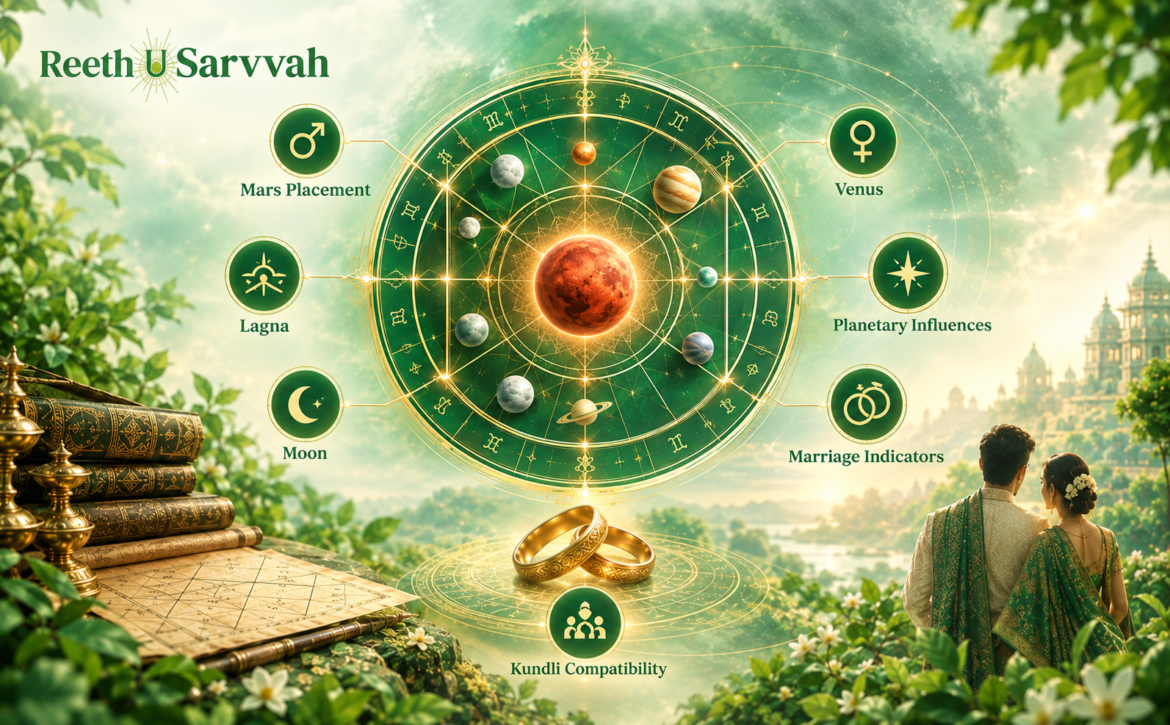
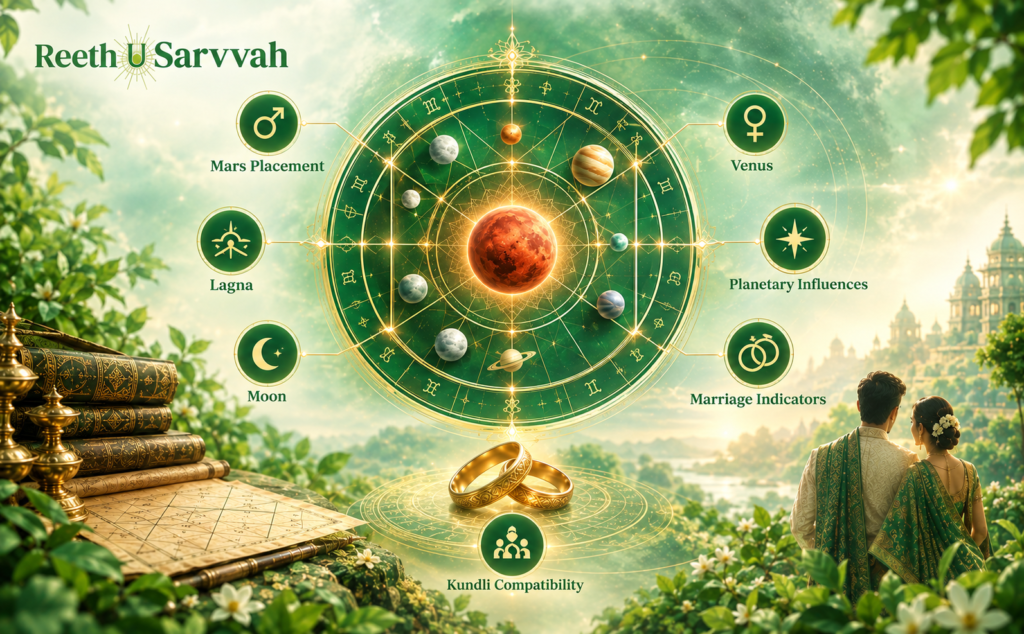
Vedic Kundli analysis showing Mars placement, Lagna, Moon, Venus, planetary influences and marriage compatibility

What Is Manglik Dosha? Does It Affect Marriage? A Complete Kundali Guide

“I have been told that I am Manglik. What does that actually mean?”
“Can a Manglik marry a non-Manglik?”
“Does Mangal Dosha automatically create problems in marriage?”
“How is Manglik Dosha checked in a Kundli?”

These are some of the questions families commonly ask when Kundali matching is being considered for marriage.

The term Manglik Dosha, also called Mangal Dosha or Kuja Dosha, comes from the tradition of Vedic astrology and relates to the position of Mars (Mangal) in a birth chart. Different astrological traditions and practitioners can apply somewhat different rules when assessing it, so a single “Manglik” label should not be treated as the complete analysis of a person’s horoscope.

At Reeth U Sarvvah, marriage guidance combines Kundali analysis and numerology, with the website describing personalised marriage compatibility and marriage-timing consultations. 

Explore Astrology & Numerology Guidance in Nagpur


What Is Manglik Dosha?

In Vedic astrology, Manglik Dosha is traditionally associated with the placement of Mars (Mangal) in certain houses of a birth chart.

These placements are commonly evaluated from the Lagna (Ascendant), and some astrologers also examine the placement from the Moon and Venus depending on the tradition they follow. Because different schools use different rules, the calculation should be understood in the context of the complete Kundli rather than from an isolated online calculator.

Why Is Mars Considered Important?

In Vedic astrology, Mars is traditionally associated with qualities such as:

  • Energy
  • Courage
  • Assertiveness
  • Drive
  • Action
  • Competition

When Mars is placed in certain houses, astrologers traditionally examine whether that placement may influence areas associated with partnership and married life.

This is an astrological interpretation, not a scientifically established cause-and-effect relationship.


How Is Manglik Dosha Checked in a Kundli?

One of the biggest problems with online Manglik calculators is that they can turn a detailed chart into a simple “Manglik / Non-Manglik” result.

A more complete traditional assessment may consider:

  • Mars Placement

The astrologer examines where Mars is positioned in the birth chart and which house it occupies.

  • Lagna

The Ascendant is generally one of the main reference points used in Kundli analysis.

  • Moon

Some Vedic astrology traditions also examine Mars relative to the Moon.

  • Venus

Some practitioners consider Mars relative to Venus when assessing marriage-related matters.

  • Aspects and Planetary Influences

The rest of the chart may also be considered, rather than interpreting Mars in isolation.

  • Overall Marriage Indicators

A broader marriage analysis can include the 7th house, 7th lord, Venus, Jupiter, Navamsa and relevant planetary periods, depending on the astrologer’s methodology.

This is why the question: “Am I Manglik?”

is often less useful than: “What does my complete Kundli indicate about marriage compatibility?”


Which Houses Are Traditionally Associated With Manglik Dosha?

There is variation between astrological traditions regarding exactly which houses are included.

A commonly cited approach examines Mars in the 1st, 4th, 7th, 8th or 12th houses, while some traditions also include the 2nd house.

Because these rules are not applied identically by every school of astrology, it is better to ask an astrologer which calculation method is being used before comparing two Kundlis.

This is important for readers

Two online calculators can sometimes give different Manglik results because they may be using different reference points or rules.

That does not necessarily mean one calculation is automatically correct.

It means the underlying method should be understood.


Does Manglik Dosha Automatically Mean Marriage Problems?

No – not according to the more detailed approach used in traditional Vedic astrology.

A “Manglik” label is not generally treated as a complete marriage analysis.

Astrologers who examine Mangal Dosha traditionally may also look for cancellation or mitigating factors and evaluate the complete chart.

This is why a person should not reject a prospective partner solely because an online tool displays:

“Manglik Dosha Present.”

The complete Kundli needs to be considered.


Can a Manglik Marry a Non-Manglik?

This is one of the most frequently asked questions about Mangal Dosha.

Traditional Vedic astrology does not reduce marriage matching to one single factor.

Depending on the school of astrology being followed, an astrologer may consider:

  • Severity of the Mars placement
  • Cancellation conditions
  • Strength and dignity of Mars
  • Overall condition of the 7th house
  • Venus and Jupiter
  • Navamsa chart
  • Both partners’ birth charts
  • Other compatibility factors
  • Relevant planetary periods

Current astrology literature discussing Manglik Dosha also emphasises that one Manglik / one non-Manglik is not by itself a complete compatibility judgment.

So the better question is not simply:

“Can a Manglik marry a non-Manglik?”

It is:

“What does the complete Kundli matching analysis show for these two individuals?”

Learn More About Kundali Reading in Nagpur


What If Both Partners Are Manglik?

This is another common question.

In some traditional astrological approaches, when both partners have relevant Mars placements, the effect is considered balanced or reduced in the matching process.

However, this should not be presented as an automatic rule for every chart.

The full marriage analysis may still consider:

  • Compatibility
  • 7th house
  • Venus
  • Jupiter
  • Navamsa
  • Planetary periods

and other factors.

Therefore, “both are Manglik” should be treated as one part of the matching discussion, not the entire conclusion.


Can Manglik Dosha Be Cancelled?

Traditional Vedic astrology includes various Dosha Bhanga or cancellation conditions.

These can differ according to the astrological school and methodology.

Factors sometimes examined include:

  • Mars being in certain signs
  • Strength or dignity of Mars
  • Beneficial planetary aspects
  • Other planetary combinations
  • Placement of Mars in the partner’s chart
  • Broader chart combinations

Because cancellation rules are technical and vary by tradition, an online list of “10 guaranteed cancellation rules” should not be treated as a substitute for a complete Kundli analysis.

So, if your report says “Manglik Dosha present”:

Do not stop at the label.

Ask:

  • Which placement created the Dosha?
  • From which reference point was it calculated?
  • Are there cancellation or balancing factors?
  • What does the complete marriage analysis show?

Does Manglik Dosha Affect Love Marriage and Arranged Marriage Differently?

The traditional astrological calculation of Mars placement does not automatically change simply because a marriage is arranged or based on a love relationship.

However, the context of the relationship can be different.

For an arranged marriage, families may focus more heavily on:

  • Kundali matching
  • Compatibility
  • Family expectations
  • Marriage timing
  • Traditional dosha analysis

For a love marriage, couples may be more interested in:

  • Compatibility
  • Communication
  • Emotional understanding
  • Timing
  • Family concerns
  • Whether Manglik Dosha needs consideration

In either situation, a complete birth-chart analysis is more informative within the astrological framework than relying on the word “Manglik” alone.

Is Manglik Dosha the Same as Kundali Matching?

No.

Manglik Dosha is only one aspect that may be considered within a broader marriage-astrology analysis.

Kundali matching can include a wider comparison of two birth charts.

Depending on the tradition, this may involve:

  • Guna Milan

Traditional compatibility calculations may compare different factors between the two charts.

  • Mangal Dosha

Mars-related factors can be separately evaluated.

  • Marriage Houses

The 7th house and its lord may be considered.

  • Venus and Jupiter

These planets are traditionally given importance in marriage-related astrology.

  • Navamsa

The D-9 chart may be examined for additional marriage-related interpretation.

  • Planetary Periods

The timing of important life periods may also be studied.

This is why “36 Guna Milan score” and “Manglik Dosha” are not exactly the same thing. Modern Kundli tools likewise treat Mangal Dosha as a separate check alongside broader compatibility analysis.


Is a High Guna Milan Score Enough for Marriage?

Not necessarily within the traditional astrological framework.

A single numerical score may be useful as an initial reference, but a broader reading can examine other factors that the score does not fully represent.

For example: Guna Milan

may be considered together with:

  • Manglik Dosha
  • 7th house
  • Venus
  • Jupiter
  • Navamsa
  • Dasha

and other chart factors. So couples should not treat one number as the entire story.


What If One Horoscope Says “Manglik” and Another Says “Non-Manglik”?

This is exactly the situation in which a methodology check becomes important.

Ask the astrologer:

  • Which houses are being considered?
  • Was Mars checked from the Ascendant?
  • Was the Moon also considered?
  • Was Venus considered?
  • Were cancellation conditions checked?
  • Was the complete Kundli reviewed?

Different calculation methods can produce different results, so the raw label should be interpreted within the method being used.


Should You Trust an Online Manglik Calculator?

Online calculators can be useful for basic educational information, but they can oversimplify the process.

A calculator may tell you: “Manglik: Yes.”

But it may not explain:

  • Why
  • Which tradition was used
  • Which reference point was used
  • Whether cancellation applies
  • How strong the placement is
  • What the rest of the Kundli shows

For an important marriage decision, families who follow Vedic astrology may prefer a personalised Kundali consultation instead of relying solely on a generic calculator.

Reeth U Sarvvah currently offers personalised Kundali reading, marriage prediction and compatibility guidance through in-person and online consultations. 

Book a Personalised Astrology Consultation


What Birth Details Are Needed for Manglik Analysis?

For a detailed Kundli analysis, astrologers generally require:

  • Date of birth
  • Exact or reasonably accurate birth time
  • Place of birth

These details are used to construct the birth chart.

Reeth U Sarvvah’s current consultation information requests birth details for astrology appointments, while its numerology services may use name and date-of-birth information depending on the consultation. 

Book an Online Astrology & Numerology Consultation


Why Is Accurate Birth Time Important?

Birth time can influence the calculation of the Ascendant and house placements, which can matter in Kundli analysis.

If the recorded birth time is uncertain, an astrologer may need to discuss how that uncertainty affects the reading.

This is particularly relevant when a person is trying to determine whether a planetary placement falls in one house or another.

Reeth U Sarvvah’s current consultation information also asks clients for date, time and place of birth for astrology consultations.


What Questions Should You Ask During a Manglik Dosha Consultation?

Before making an important marriage decision, ask specific questions rather than simply asking: “Am I Manglik?”

A better consultation can include:

  • “Which placement is creating the Mangal Dosha?”
  • “Which calculation method are you using?”
  • “Is the Dosha being checked from Lagna, Moon or another reference point?”
  • “Are there cancellation or balancing factors?”
  • “What does the partner’s Kundli show?”
  • “How does Manglik Dosha fit into the overall compatibility analysis?”
  • “Are there other marriage-related factors that should be considered?”

These questions can help you understand the interpretation instead of focusing only on a yes/no label.


Are Manglik Dosha Remedies Necessary?

Traditional astrology offers different remedies depending on the practitioner and school, including mantras, puja-based practices and other traditional remedies.

However, remedies should be presented as traditional or spiritual practices, not guaranteed ways to change a marriage outcome.

The website’s current philosophy describes personalised remedies and spiritual guidance as part of its services, including mantras, gemstones and other practices.

Explore Astrology & Spiritual Guidance


Should You Reject a Marriage Proposal Because Someone Is Manglik?

A marriage decision is much broader than one astrological label.

For people who choose to include astrology in their decision-making, Manglik Dosha can be considered alongside the complete Kundli, compatibility discussion and the couple’s actual relationship.

Practical factors remain important too, including:

  • Communication
  • Values
  • Financial expectations
  • Family expectations
  • Lifestyle
  • Future goals
  • Mutual respect

Astrology can be one lens within the decision-making process; it should not be treated as a substitute for understanding the person or relationship itself.


How Does Reeth U Sarvvah Approach Marriage Astrology?

Reeth U Sarvvah’s website describes her as a Vedic astrologer and numerologist in Nagpur, with services including Kundali reading, marriage prediction and compatibility guidance. Her published content also describes combining astrology and numerology for relationship-oriented consultations. 

Her consultation process is described as personalised and based on the individual’s birth details rather than only a generic zodiac-sign reading.

Learn More About Reeth U Sarvvah


Can Manglik Dosha Be Understood Without a Full Kundli?

A basic Manglik calculation can identify a Mars placement, but understanding what it means in the context of marriage requires a broader chart interpretation.

This distinction is important.

A person might search: “Am I Manglik by date of birth?”

But the more meaningful question is: “What does my complete birth chart indicate about marriage compatibility?”

That is where a full Kundali reading in Nagpur can provide more context within the Vedic astrology framework.


Manglik Dosha: Quick Guide

QuestionKey point
What is Manglik Dosha?A traditional Vedic astrology concept related to Mars placement in the birth chart.
Is every Manglik chart the same?No. The full chart and calculation method matter.
Can a Manglik marry a non-Manglik?This is assessed through the complete compatibility analysis; the label alone is not the whole evaluation.
Can Manglik Dosha be cancelled?Traditional astrology includes various cancellation/balancing conditions, depending on the method used.
Is Manglik Dosha the same as Kundali matching?No. It is one factor that may be considered alongside broader matching.
Is an online calculator enough?It can provide a basic indication but may not provide a complete chart interpretation.
What information is needed?Date, birth time and place are commonly used for a detailed Kundli.
Should you make a marriage decision only on Manglik status?A broader understanding of the relationship and all relevant factors is important.

FAQ:

Q1:  What is Manglik Dosha in Kundli?

Manglik Dosha, also called Mangal Dosha or Kuja Dosha, is a traditional Vedic astrology concept associated with the placement of Mars in specific houses of a birth chart. Different astrological traditions may use different calculation rules.

Q2: How do I know if I am Manglik?

A Manglik assessment requires your birth chart and the calculation method being used. Date of birth, birth time and place are commonly required for a detailed Kundli analysis.

Q3:Can a Manglik marry a non-Manglik?

In traditional Vedic astrology, the answer is not determined by the Manglik label alone. Astrologers may consider cancellation conditions, both partners’ charts and broader marriage indicators.

Q4: What happens if both partners are Manglik?

Some traditional approaches consider matching two charts with relevant Mars placements as a balancing factor. However, the complete charts and the specific astrological method should still be examined.

Q5: Can Manglik Dosha be cancelled?

Traditional Vedic astrology includes different Dosha Bhanga or cancellation conditions. Their application varies by methodology, so the complete birth chart should be reviewed rather than relying on a single online rule.

Q6: Is Manglik Dosha the same as Kundali matching?

No. Manglik Dosha is one factor that may be examined as part of a broader Kundali matching or marriage-compatibility analysis.

Q7: Does Manglik Dosha guarantee problems in marriage?

No. Within the traditional astrological framework, it is treated as one chart factor rather than a guaranteed prediction of marriage problems. A complete Kundli analysis considers additional planetary and compatibility factors.

Q8: Is Mangal Dosha checked during Kundali matching?

Yes, many traditional matching approaches check Mangal Dosha separately alongside other marriage-compatibility factors.

Q9: Do I need exact birth time for Manglik Dosha?

Accurate birth time can be important because it affects the Ascendant and house placements used in Kundli calculations. Reeth U Sarvvah’s astrology consultation information requests date, time and place of birth. 

Q10: Are Manglik Dosha remedies necessary?

Traditional astrologers may suggest remedies based on their interpretation, such as mantras or rituals. These are spiritual/astrological practices and should not be presented as guaranteed outcomes.

Q11: Should I reject a Manglik marriage proposal?

A marriage decision should not be reduced to one astrological label. Couples and families can consider the complete relationship, practical compatibility and, for those who follow astrology, the broader Kundli analysis.


Conclusion: What Should You Really Look at Beyond “Manglik”?

Being told “you are Manglik” can sound alarming when the term is presented without explanation.

The more useful approach is to understand:

  • What placement is involved?
  • Which calculation method is being used?
  • Are there cancellation or balancing factors?
  • What does the other person’s Kundli show?
  • What does the complete marriage analysis indicate?

For people who choose Vedic astrology as part of their marriage-planning process, a personalised Kundli consultation can provide more context than a simple Manglik yes/no result.

Reeth U Sarvvah provides Kundali reading, marriage compatibility and astrology/numerology consultations in Nagpur and online, according to the current website.

Book a Personalised Kundali & Marriage Consultation


📍 1st floor, Honey Indra Tower, Inox Rd, beside Mahindra Unnati Motors, near Garoba Maidan, Phase 2, Shastri Nagar, Nagpur, Maharashtra 440008
📞 +91 8087669357
📧 reetrupani1@gmail.com
🌐 reethusarvvah.in

Get Your First Free Session!

Know what the stars and numbers reveal about your career, relationships, health, finances & life direction.
Get a personalized guidance session from Reeth U Sarvvah.